
GEO & AI Search Presentation Now Available
Our recent CSIA presentation on GEO (Generative Engine Optimization) is now live.
The session covers how AI search is changing visibility, why some content gets cited while other content gets ignored, and the practical steps industrial brands can take to improve how they appear across tools like ChatGPT, Google AI Overviews, and Perplexity.
Generative Engine Optimization (GEO): Winning Visibility in AI Search
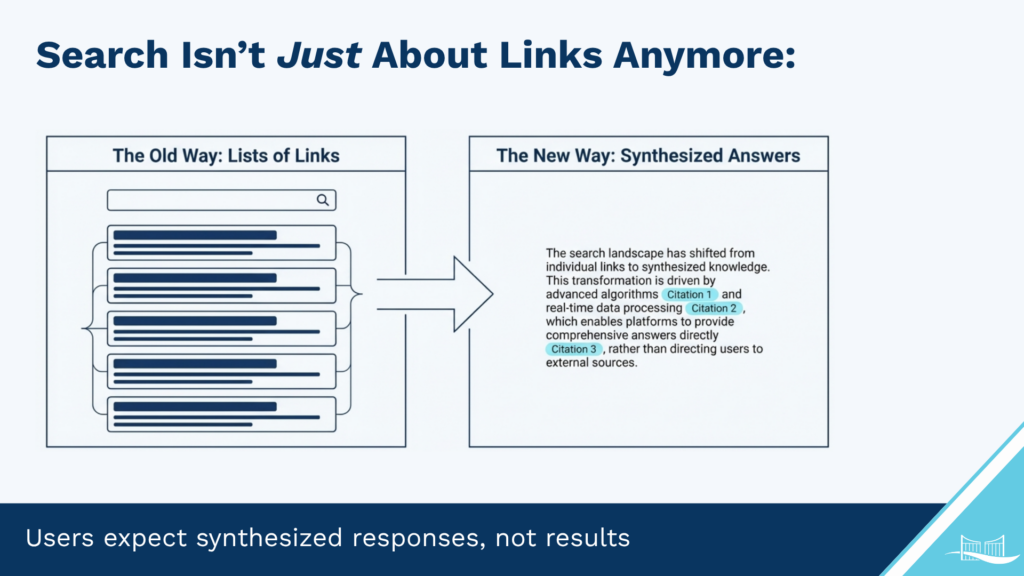
Search has changed—and so has what it takes to be visible.
Instead of competing for rankings alone, brands now need to be cited inside AI-generated answers across platforms like ChatGPT and Google AI Overviews.
That shift can feel overwhelming. So we simplified it.
If you only focus on a handful of things over the next six months, these are the actions that will actually move the needle. This checklist is designed to be practical, realistic, and aligned with how AI systems decide what content to surface.
Essential GEO Checklist:
10 Actionable Steps to Take in the Next 6 Months to Start Showing Up in AI Search
Define your 10–20 target AI queries from real customer language
Pull directly from sales calls, proposals, and client conversations.Build one strong topic cluster around a core service
Start with one area (e.g., SCADA systems) and create 3–5 supporting pages around it.Rewrite key pages to answer questions immediately and use them as headings
Use your target queries as H1s, H2s, and H3s, and answer them clearly in the first few sentences.Restructure content into clean, scannable formats
Use headings, bullets, lists, and tables so AI can extract it.Add real authors to every piece of content
Create an author page for each expert and update their LinkedIn to match credentials and experience.Have your dev team implement backend schema
Start with Article, FAQ, and HowTo schema to improve machine readability.Update every piece of core evergreen content
Add a fresh statistic or visual, include a new quote, cite a recent study, and update headers to reflect real query language.Get your brand mentioned in at least 3 external sources
Focus on industry publications, partner sites, podcasts, or associations.Upload transcripts as show notes for any video or podcast content
Make audio/video content readable and indexable by AI systems.Track your 10–20 key queries monthly to measure progress
Start with a simple spreadsheet. Track your queries, visibility, and key metrics like citation rate, share of voice, and trend over time.
Start Small and Stay Consistent
The fundamentals of good content still matter. But how that content is structured, where your brand shows up, and how clearly you answer real questions now play a much bigger role in whether you’re included in AI-generated responses.
It can feel overwhelming, but start with these 10 actions, stay consistent, and track your progress over time. That’s how visibility builds.
Want a Deeper Dive?
Our full CSIA presentation on GEO and AI search is now available.
In the presentation, we break down:
- How AI search actually works
- What drives AI citations
- The biggest shift happening between SEO and GEO
- Practical optimization strategies
- How to track and measure AI visibility over time
Have questions about GEO or want help getting started? Reach out to our team—we’re happy to walk through your current visibility and where to focus next.